
You know that feeling when your brain is tired but you haven’t actually done anything?
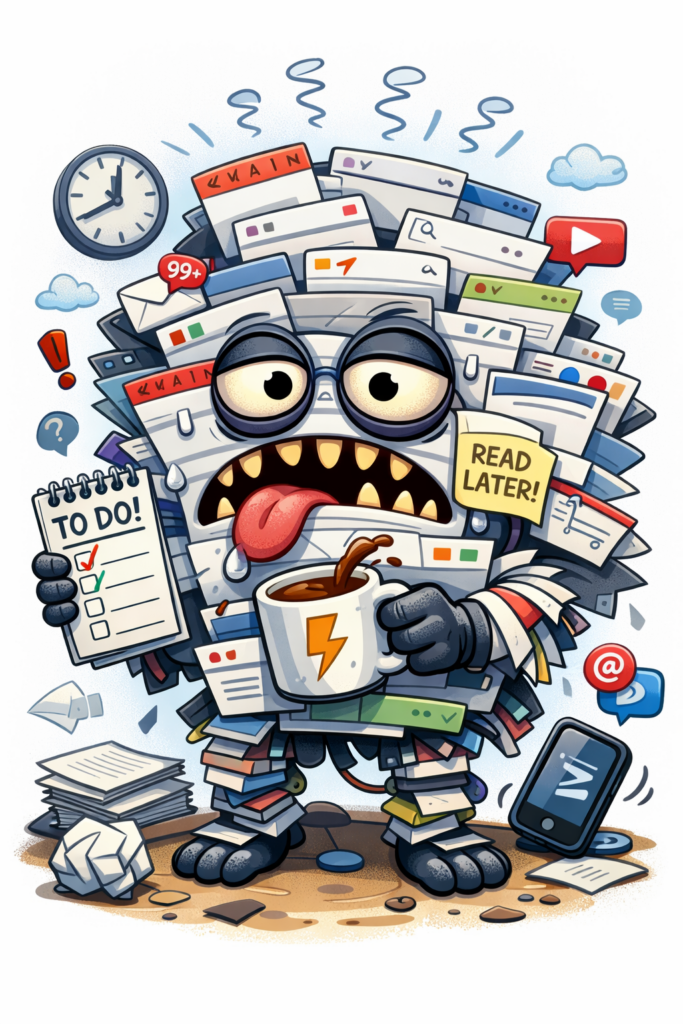
You’re not imagining it — you’re micro‑cluttered.
Not “my inbox has 14,000 unread emails” clutter.
Not “my desktop looks like a crime scene” clutter.
I’m talking about the tiny, invisible digital messes that don’t look like clutter at all… but quietly siphon your mental energy all day long.
Micro‑clutter is the stuff you ignore because it feels too small to matter.
But here’s the truth: small messes create big cognitive leaks.
Let’s break it down.
What Exactly Is Micro‑Clutter?
Micro‑clutter is the digital equivalent of leaving one sock on the floor.
It’s not a disaster.
It’s not urgent or even noticeable… until suddenly your entire room feels off.
Examples include:
- The half‑written email you “just need to finish later”
- The three notifications you keep swiping away instead of clearing
- The Slack DM you read but didn’t respond to
- The 14 screenshots you took and never organized
- The reminder you snoozed for the 11th time
- The browser tab you’re “definitely going to read tonight”
- The note you wrote to yourself that now reads like a cryptic ransom message
Individually, these things are nothing.
Collectively, they’re a mental fog machine.
Why Micro‑Clutter Drains So Much Energy
Your brain hates open loops.
It’s wired to keep track of unfinished tasks, even when you’re not consciously thinking about them.
Every tiny digital mess becomes a background process your brain has to monitor:
- “Don’t forget that message.”
- “Remember to reply to that email.”
- “You still need to read that article.”
- “What was that screenshot for again?”
You’re not overwhelmed because you’re disorganized.
You’re overwhelmed because your brain is juggling 200 tiny things you never officially closed.
This creates:
- Low‑grade anxiety
- Decision fatigue
- A constant sense of being behind
- Mental buffering (you know the feeling)
- Reduced focus
- Lower creativity
Micro‑clutter is like having 37 apps open on your phone.
Nothing crashes… but everything slows down.
The Symptoms of Micro‑Clutter (You’ll Recognize These)
You might be micro‑cluttered if:
- You feel mentally tired before you even start working
- You keep switching tasks without finishing any
- You reread the same email three times
- You open your inbox and immediately want to lie down
- You feel “busy” but not productive
- You can’t remember what you were doing five seconds ago
- You have a vague sense of guilt about… something
Micro‑clutter doesn’t scream.
It whispers.
Constantly.
The Fix: 5-Minute Micro‑Declutter Rituals
You don’t need a full digital overhaul, a productivity system orto color‑code your folders like a Pinterest influencer.
You just need to close a few loops.
Here are simple, InboxOverload‑approved micro‑declutter rituals you can do in five minutes or less:
1. The Notification Sweep
Clear every badge, ping, and alert.
If it’s not important, delete it.
If it is important, handle it.
2. The Screenshot Purge
Delete every screenshot older than 48 hours.
If it mattered, you’d remember why you took it.
3. The Two‑Sentence Reply Rule
If you can respond in two sentences, do it now.
Future‑you will send a thank‑you card.
4. The Tab Reset
Bookmark anything you think you’ll read later.
Close everything else.
Your browser is not a to‑do list.
5. The Daily “Close the Loop” Minute
Pick one unfinished thing — just one — and finish it.
Your brain will exhale.
The Big Truth: Small Messes, Big Energy Leak
Micro‑clutter is sneaky.
It doesn’t look like a problem.
It doesn’t feel like a problem.
But it quietly drains your focus, your creativity, and your sense of control.
The good news?
You don’t need to fix everything.
You just need to close a few loops every day.
Your brain will thank you.
Your energy will return.
And your digital life will finally feel like it’s working with you instead of against you.
Sorry I have been playing hookey during the holidays.
Want to check out my other projects?
(3) Inbox Overload – YouTube
Flight Shorts – YouTube
and don’t forget to check out my other posts in the Blog Archive.
Share this post: on Twitter on Facebook