This is your brain…
Your brain has a complicated relationship with browser tabs. It is not complicated in the cute, rom‑com way. It is complicated in the way a toxic friendship is complicated. You hype each other up, you sabotage each other, and then you pretend everything is fine while dozens of tabs sit there breathing heavily in the background.
Your brain loves tabs because every new one feels like possibility. Each tab is a tiny spark of dopamine. It represents a future version of you who will absolutely read that article, watch that tutorial, compare those running shoes, or finally learn how to use Notion in a way that feels like mastery instead of chaos. Tabs are the digital version of putting a book on your nightstand and telling yourself you will read it before bed. You probably will not, but the intention feels incredible.
Tabs also make you feel safe. A tab is a placeholder for a thought you do not want to lose. Your brain whispers that closing it means forgetting it, and forgetting it means losing the future version of you who was going to act on it. So you keep it open. Then you keep another open. Then another. Before long your browser looks like a barcode.
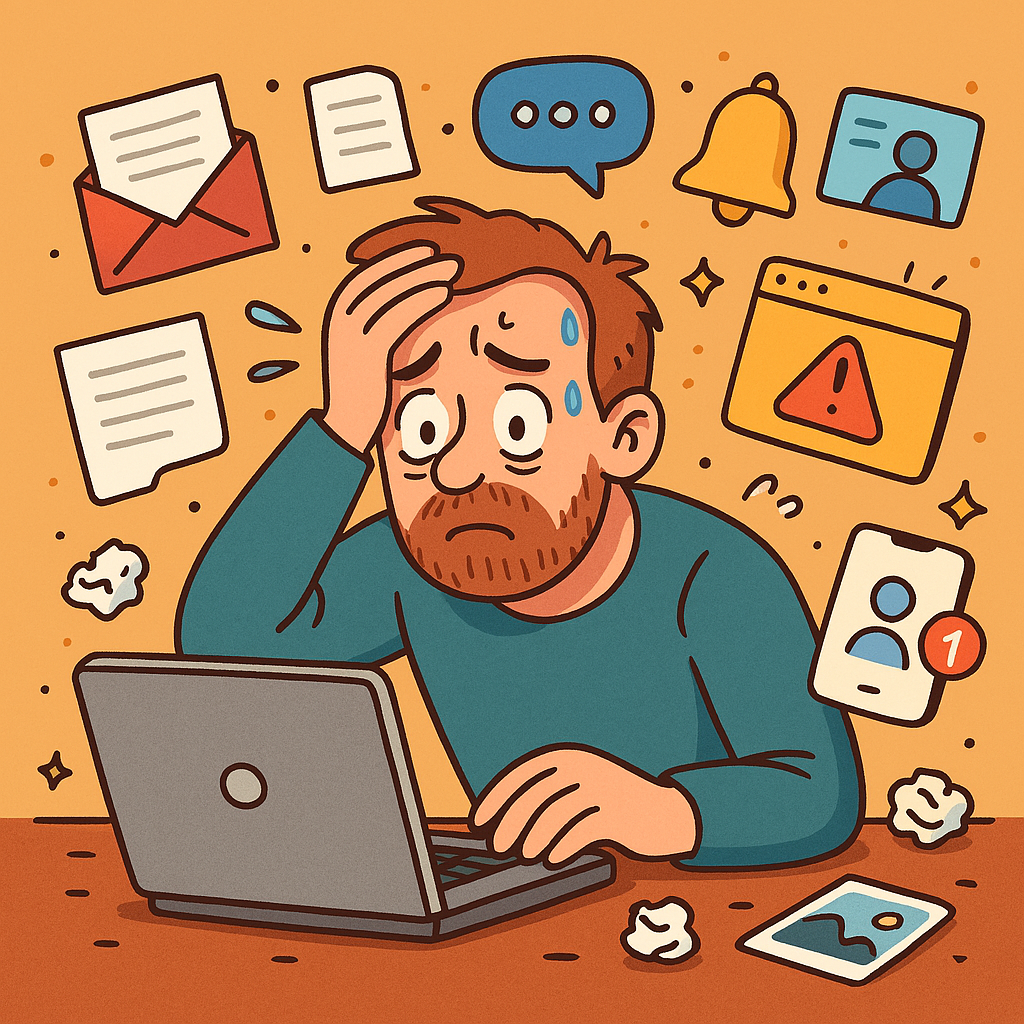
Here is the twist. Your brain also hates tabs. Every open tab creates attention residue, which is the mental lint left behind when you jump between tasks. Each tab becomes a tiny reminder of something unfinished. The paused video. The half‑completed form. The article you meant to read. The shopping cart you swear you are still thinking about. Even the tab from two years ago that you keep open because closing it feels like admitting defeat. Tabs do not just hold information. They hold obligation.
The more tabs you keep open, the more your brain starts to panic. If you close one, you might forget it. Keep it open, you feel guilty. bookmark it, it disappears into a black hole. If you read it now, you lose an hour. So you do nothing. You simply let the tab live there, like a piece of mail on the counter that you walk around for three weeks.
None of this is your fault. Your brain was not built for infinite information. It was built for one task, one environment, one threat, one goal. Not dozens of tabs, a handful of apps, a stack of notifications, and a Slack message that says “quick question.” Tabs overload your working memory. They fragment your attention. They create the illusion of productivity while quietly draining your mental battery. And yet your brain keeps opening them because it is trying to help. It is trying to remember, plan and trying to keep your world organized. It is simply using the wrong tool.
You do not need a tab detox. You need a tab system. A way to capture ideas without keeping them open. A way to save articles without losing them. A way to park tasks without cluttering your browser. A way to offload memory without offloading guilt. This is where AI, automation, and smarter workflows come in. Not to replace your brain, but to stop it from drowning in digital debris.
Your brain is not the problem. Your tabs are not the problem. The lack of a system is the problem. And that is exactly what I love working on as a process engineer.
Check out the other blog posts in the Archive.
Check out my content on Youtube
Thanks for reading!
Share this post: on Twitter on Facebook